Thermal Dissipation: Backlight MTBF & Continuous Duty Cycles
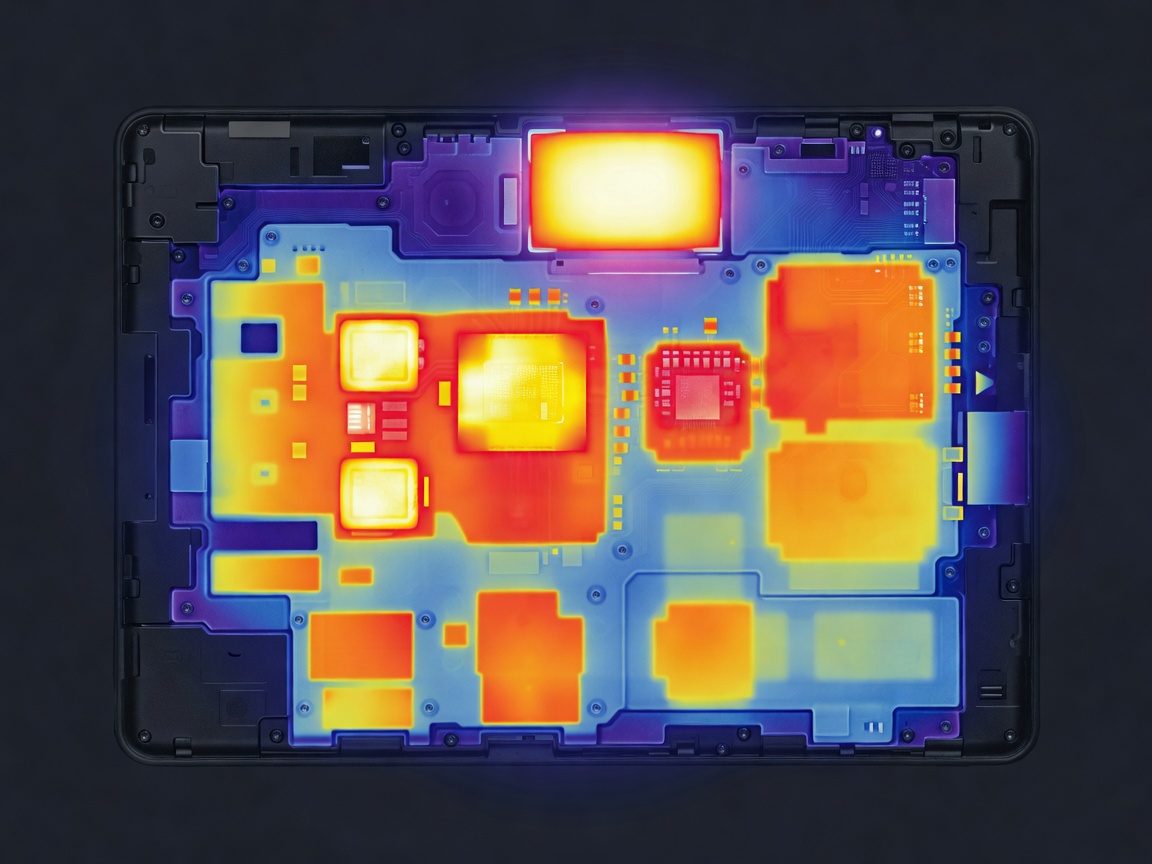
Heat is the primary cause of hardware failure in high-output solid-state commercial electronics. When a commercial flat panel is pushed to generate 700 to 2,500 nits of surface luminance over a continuous 24-hour cycle, the LED junction temperatures can easily exceed 90°C without structured cooling pathways. Understanding thermal physics is essential for avoiding premature backlight failure.
Arrhenius Acceleration and the L70 Lifespan Standard
The industry benchmark for commercial display longevity is the L70 standard: the operating duration (measured in hours) before the display's maximum brightness drops to 70% of its initial factory rating. While consumer panels are rarely rated beyond 20,000 hours, enterprise digital signage displays are engineered for 50,000 to 70,000 hours of continuous service.
Under the Arrhenius reaction rate principle, for every 10°C increase in the operating junction temperature of an LED semiconductor, the component degradation rate roughly doubles. Excessive heat leads to three irreversible physical failures:
- Cerium-Doped Phosphor Degradation: White LEDs rely on yellow phosphor coatings over royal blue emitter chips. High continuous thermal stress breaks down this chemical phosphor layer, shifting the display's color temperature noticeably toward cold violet/blue over time.
- Electromigration in Die Interconnects: Sustained high temperatures cause metallic migration across microscopic gold wire bonds, resulting in open circuits and row-line dropouts.
- Electrolytic Capacitor Desiccation: Power distribution boards positioned adjacent to unventilated LED rails dry out prematurely, causing ripple voltage instability and sudden power supply shutdown.
Passive Conduction vs. Active Cross-Flow Fans
Commercial hardware designers utilize two distinct cooling architectures depending on operational environment constraints:
1. Passive Heavy-Chassis Dissipation (500 to 700 Nits)
For meeting rooms, hospital patient corridors, and silent banking environments, acoustic noise from cooling fans is unacceptable. Passive commercial panels deploy full-coverage extruded aluminum backplates. The metal backplate is bonded to the LED driver rails using thermal gap pads with conductivities between 3.0 and 5.0 W/m-K. Natural chimney convection pulls cool air through the bottom perimeter louvers and expels warm air via top rear slots.
2. Active Cross-Flow Convection (1,500 to 4,000 Nits)
High-brightness window displays and semi-outdoor transit displays generate significant thermal wattage. These panels feature variable-speed magnetic levitation blowers managed by microcontrollers tied to multiple internal thermistors. If solar radiation pushes the panel's interior temperature past 65°C, the fans increase RPM while the internal firmware modulates LED drive current to prevent blackening screen defects.
| Operating Factor | Standard Consumer Display | Enterprise Commercial Signage |
|---|---|---|
| Typical Chassis Material | Molded Polystyrene / ABS Plastic | Die-Cast Aluminum & Galvanized Steel |
| Internal Thermal Sensors | 0 – 1 (Basic CPU Monitor) | 3 – 6 (Edge-LED, Power Board, Ambience) |
| Thermal Throttling Logic | Hard Shutdown at Limit | Linear Dynamic Nit Attenuation |
| Mean Time Between Failures | ~15,000 Hours (L50 equivalent) | 60,000 – 100,000 Hours (L70 / MTBF) |
Preventing Solar Thermal Load in Street-Facing Windows
Storefront displays positioned behind structural exterior glass face combined thermal energy from both high-output internal backlights and incoming solar infrared radiation. When standard liquid crystal displays exceed 75°C to 80°C surface temperature, the liquid crystals transition into an isotropic state, creating large, dark black blemishes across the active viewing surface.
Commercial window-facing panels feature specialized High-Temperature Transflective / IPS liquid crystals rated to withstand thermal loads up to 110°C (230°F) without isotropic blackening. Paired with anti-reflective infrared coatings on the front glass, these panels maintain operational clarity in direct sunlight.