Panel Duty Ratings: Why Consumer TVs Fail in 24/7 Commercial Environments
Facility operators and IT architects are frequently tempted by the low initial retail price of domestic 4K consumer televisions. On paper, both display categories boast Ultra HD 3840×2160 resolutions, HDMI input ports, and thin bezels. However, examining the thermal tolerances, optical polarizers, and component duty cycle ratings reveals fundamental mechanical divergence.
The Mechanics of Thermal Trapping & Liquid Crystal Warping
Consumer televisions are rated for an operational lifespan based on 6 to 8 hours of daily use in air-conditioned residential spaces (typically 20°C to 24°C). Their internal chassis uses lightweight molded ABS plastics that do not act as structural heatsinks. In a commercial setting where screens run 16 to 24 hours daily, heat from the edge-lit LED drivers builds up continuously inside the housing.
This trapped heat causes thermal stress on the thin-film transistor (TFT) liquid crystal glass. Over 6 to 12 months, this induces thermal mura (clouding, permanent black splotches, or yellow blotches) caused by localized expansion of the alignment layers. Commercial panels circumvent this by mounting the display assembly directly onto a die-cast or extruded aluminum chassis that pulls thermal energy away from the substrate.
Portrait Orientation and Gravity Vectoring
Nearly 50% of commercial signage deployments—including directory boards, retail fashion totems, and digital menu totems—require vertical (portrait) mounting. Consumer televisions are engineered exclusively for landscape operation. When a consumer TV is mounted vertically, two structural failures occur:
- Backlight Convection Breakdown: Hot air naturally rises. In portrait orientation, heat from the entire light-emitting diode string funnels straight to what was the display's side edge, creating a severe thermal chimney that melts the internal diffuser sheet.
- Liquid Crystal Sagging: The spacers and sealants within consumer glass panels are not designed to withstand gravitational shear forces over vertical spans exceeding 40 inches. Liquid crystal fluid slowly pools toward the lower bezel, generating severe chromatic aberration and localized polarization failure.
| Evaluation Metric | Consumer Domestic TV | Commercial Signage Display |
|---|---|---|
| Rated Duty Cycle | 6–8 Hours / Day | 16/7 to 24/7 Continuous Operation |
| Typical Peak Brightness | 250 – 350 Nits | 500 – 2,500+ Nits |
| Surface Glare Treatment | Glossy (1% – 3% Haze) | Matte Anti-Glare (28% – 44% Haze) |
| Portrait Orientation Support | Strictly Voided / Unsupported | Engineered & Certified with Even Diffusion |
| Remote Control Hardware | Infrared Only / Consumer CEC | RS-232C, RJ-45 Ethernet, Crestron/AMX Certified |
| Warranty Terms | Domestic Use Only (Commercial Voids) | 3-Year to 5-Year Advanced Replacement On-Site |
Anti-Reflective Haze and Polarized Viewing
Ambient light in modern glass-fronted buildings regularly hits 800 to 1,200 lux. Consumer panels feature high-gloss screens designed to boost apparent contrast ratios in low-light home theaters. Under commercial fluorescent or spotlight fixtures, glossy glass turns into an unintended mirror, obscuring flight details or menu pricing.
Commercial displays feature chemical matte etching on the outer glass surface, rated at 28% to 44% haze. This layer breaks direct point-source glare into dispersed, low-intensity diffuse reflections. Additionally, commercial panels incorporate circular or quarter-wave retarder films, allowing viewers wearing polarized sunglasses (common in transit hubs, drive-throughs, and outdoor plazas) to view content without the blackout extinction effect common to consumer displays.
Control Protocol and Power-Cycle Reliability
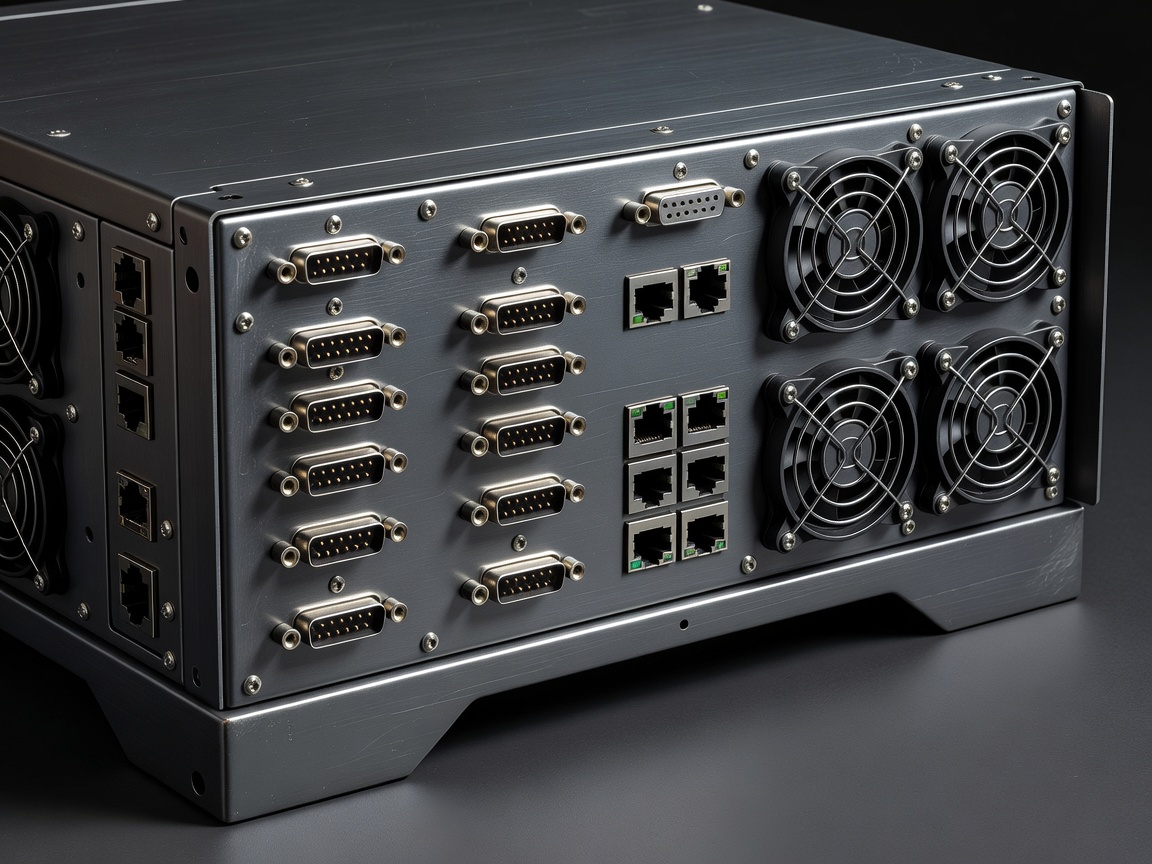
Consumer televisions rely on consumer IR remotes and basic HDMI Consumer Electronics Control (CEC). In enterprise networks managing hundreds of endpoints, automated monitoring is essential. Commercial displays integrate RS-232C serial interfaces and secure RJ-45 Ethernet controllers. AV systems managers can query hardware telemetry in real-time, including internal PCB temperature, backlight runtime, fan tachometer readings, and input signal validity.
Furthermore, commercial power supplies are engineered with industrial capacitors rated to 105°C (compared to 85°C consumer equivalents) to resist utility brownouts, automated building power cycles, and high inrush current spikes without logic corruption.